Eleven timed 100-question papers: six full-length mocks across the whole blueprint and six subject-wise exams for the two systems that carry 70% of the marks. Same clock, same tools, same question structure as the exam platform.
80 vignette-based questions — a two-to-four-sentence case followed by four linked questions in which the scenario evolves — then 20 stand-alone questions. Four options, one best answer, qualifiers like MOST and FIRST in capitals.
Highlight key words, flag a question, review the list, change any answer before you submit, a timer that doesn't stop. Media questions with an image or clip, as in the real exam's enhanced multiple-choice items.
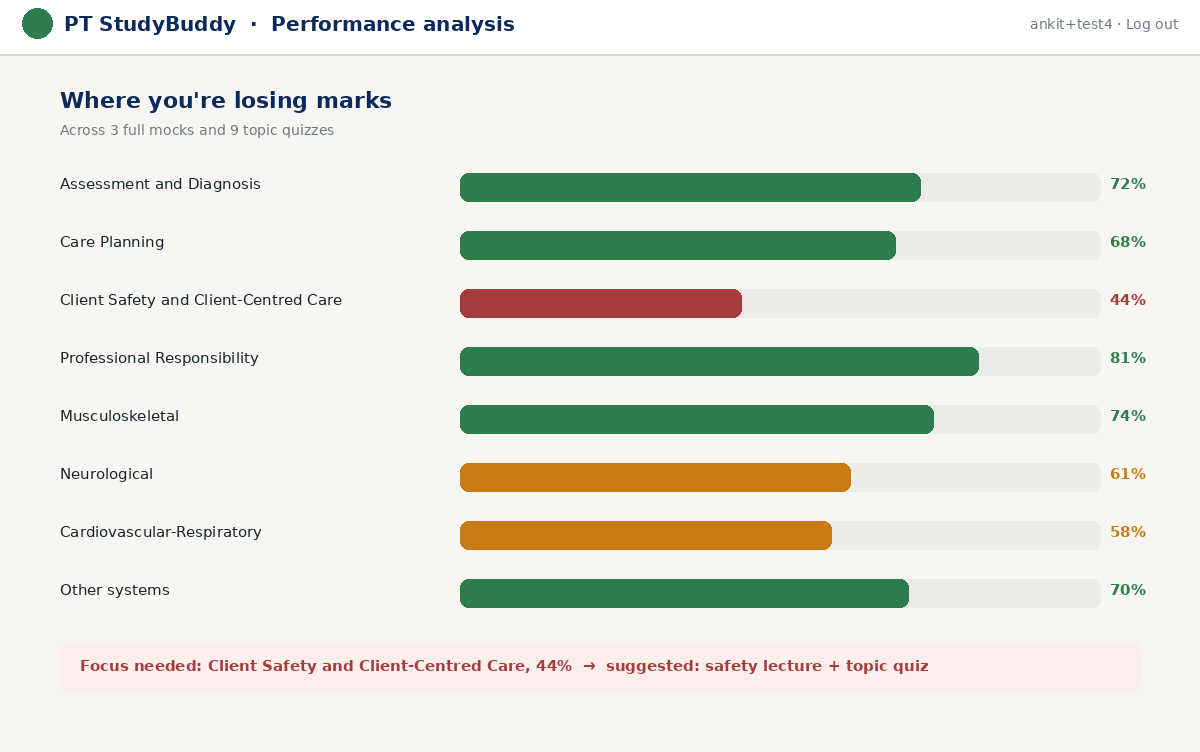
After you submit: your score, a review of every question with why the right answer is right and each distractor wrong, and your results by blueprint domain and by body system, with the weakest area flagged.
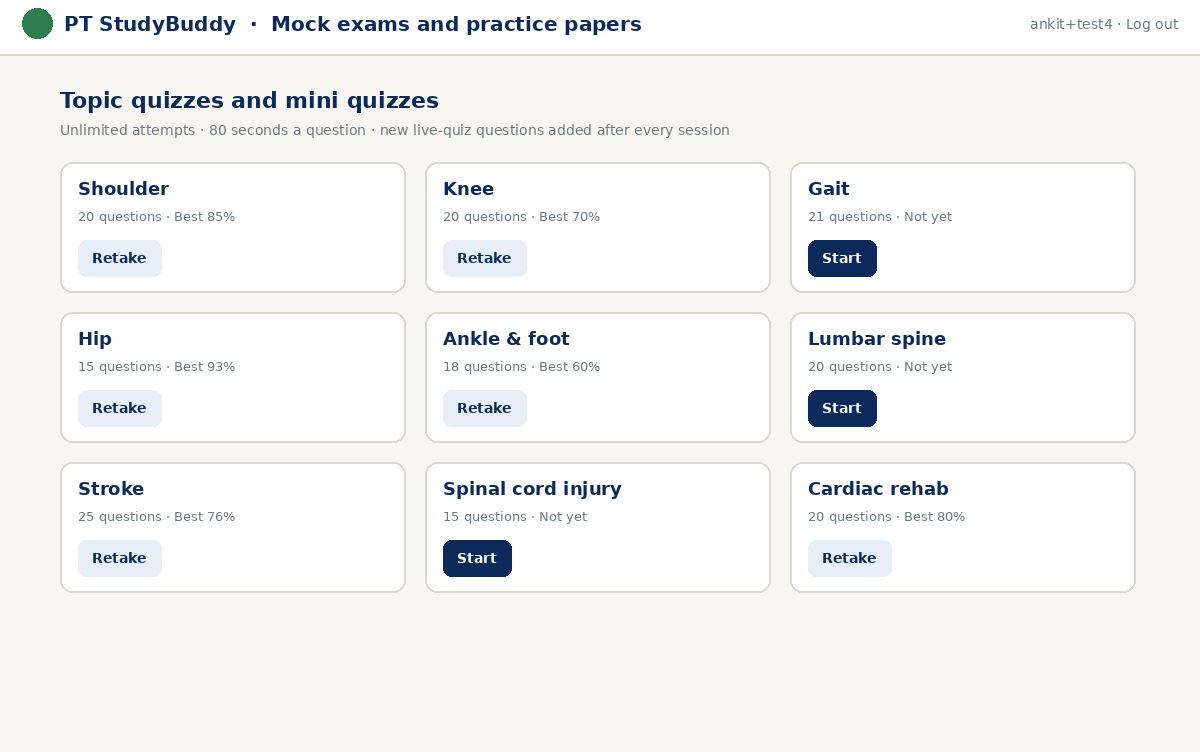
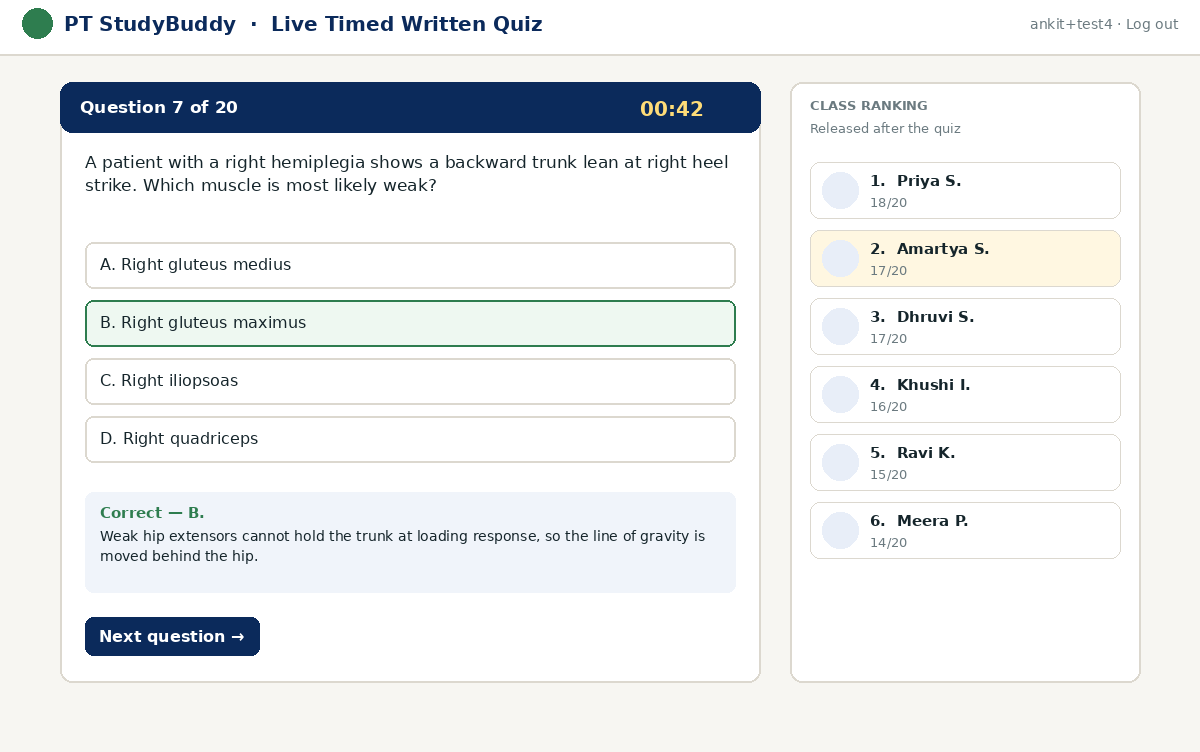
Six 100-question subject papers (four musculoskeletal, two neurology), 15 topic quizzes released as each subject is taught, and 10 live quizzes with cohort ranking. No question is repeated across papers.
One stand-alone question in the CPTE style. Key words are highlighted the way the mock interface does it. Tap an answer.
Want mocks only? See the mock packs — from $99.
Already studied and only want exam practice? Buy the mocks on their own. Your login arrives by email a minute after payment; you see only the papers you bought.
One payment, no subscription. Prices in USD. Access runs 3 months from the day you pay.
Same length and clock (100 questions, 2.5 hours), same structure (80 vignette-based questions in sets of four, then 20 stand-alone), same tools (highlight, flag, review, change answers until you submit) and the same blueprint weighting: musculoskeletal 50%, neurological 20%, cardiovascular-respiratory 15%, other systems 15%.
One point per correct answer and no negative marking, exactly as the real written section is scored, plus a scaled score for comparing attempts and a breakdown by blueprint domain and body system. The real exam reports a score for each section and a combined score, and the pass/fail decision rests on the combined score; a mock score is a guide to readiness, not a prediction of it.
Yes, once: each full-length mock allows two attempts, and the review — every question with the rationale for all four options — stays open.
No. The six subject-wise papers (four musculoskeletal, two neurology) are separate 100-question sets, and no question appears in more than one paper.
Yes. Mock Starter (Exams 1 and 2, $99), Mock Pack (Exams 1 to 5, $149) or Complete Written Practice (all six exams and the 15 topic quizzes, $199), each with 3 months of access. Your login arrives by email after payment. See the packs.